
- Solutions
- Use Cases
- Resources
- Company
- Support

Kubernetes can become highly complex for application developers, especially when dealing with Kubernetes resources and configurations (networking rules, service discovery, and RBAC [role-based access control] permissions). The same is true for platform-level considerations such as CI/CD (continuous integration, continuous delivery and/or deployment) and organizational security. Developer self-service in Kubernetes involves platforms and tools that abstract away these complexities, enabling you to focus on implementing your products and applications with minimal operational burden.
Through user-friendly interfaces, predefined templates, and automated workflows, you can perform tasks like spinning up new development environments, deploying code to various stages, scaling applications, or accessing vital monitoring and logging data, all with a few clicks or simple commands. This alleviates infrastructure provisioning bottlenecks, allowing you to iterate and deploy faster.
This article compares two popular Kubernetes self-service platforms, mogenius and OpenShift . While mogenius is a Kubernetes management platform built specifically for developers, OpenShift is a Red Hat product offering end-to-end application development and deployment with attached cluster management. The following sections compare their features, ease of use, pricing, current integrations with popular Kubernetes providers, documentation and support, and the level of maturity each solution has.
OpenShift is easily connected with the larger Red Hat corporation and solutions. Therefore, you get a larger feature set for your enterprise problems without reaching for third-party solutions. On the other hand, mogenius is more specialized and focused on simplifying Kubernetes for your developer teams, prioritizing ease of use, speed, and reduced overhead.
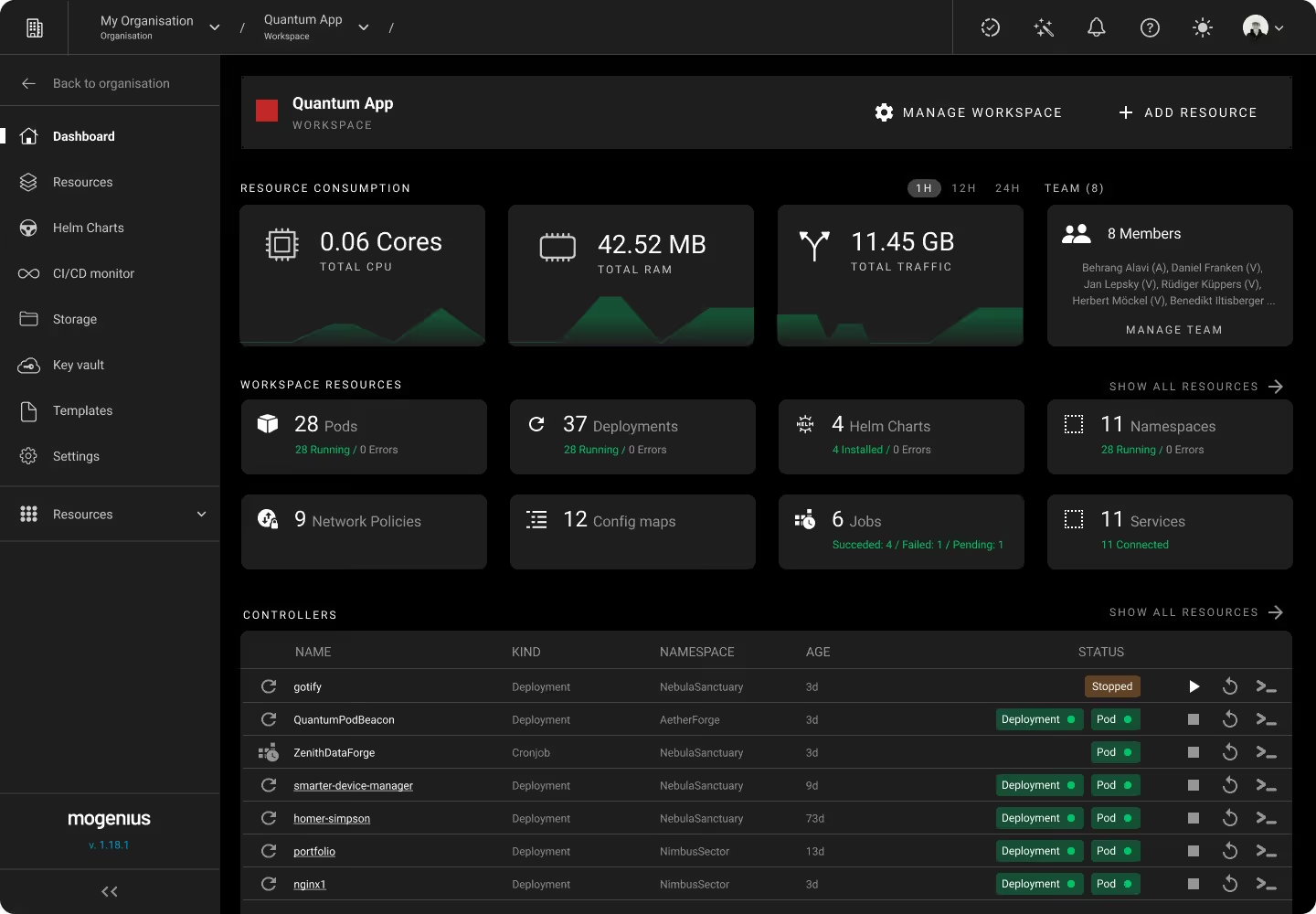
mogenius acts as a layer on top of your Kubernetes environment, giving you management and automation features. It offers self-service workspaces and an interface for collaboratively managing Kubernetes resources, workloads, and deployments. You get easier management with plugin observability (logs, events, and metrics) and dashboards for your cluster insights; you also have real-time monitoring and alerts for your resources and deployments without manually instrumenting your environment. Kubernetes resources can be created, edited, and managed right from the mogenius interface, with templates for standardization and CI/CD capabilities to implement your entire product lifecycle. Tools and services across monitoring, secrets management, log aggregation, and policy engines can be integrated, simplifying your entire infrastructure workflow. For additional support, mogenius offers professional services such as managed cluster setups, architecture consulting, and hands-on migration support. These are aimed at ensuring organizations can adopt or scale their Kubernetes stack with confidence.
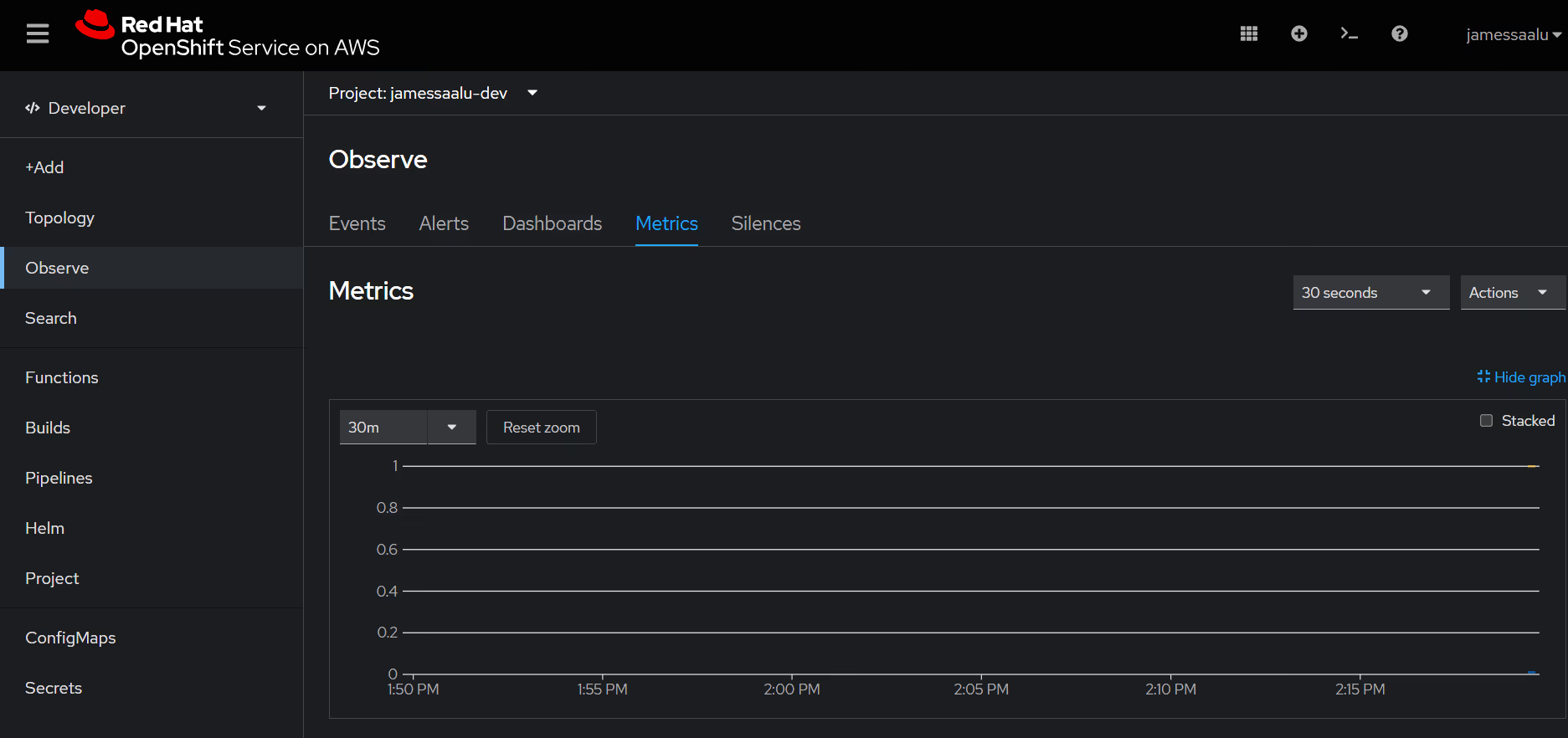
OpenShift consists of a package of proprietary products from Red Hat , including OpenShift Container Platform , OpenShift Virtualization Engine , and OpenShift Pipelines . The platforms are based on Kubernetes and focused on the entire lifecycle of containerized applications (building, deploying, scaling, and managing). Red Hat focuses on the enterprise user experience, which means OpenShift is designed to meet the demands of large organizations, offering the features, scalability, and governance needed to orchestrate containers reliably across the organization. This includes an integrated container registry, build automation, application lifecycle management, developer tooling, and a web console for easy application management and monitoring.
Subscribe to our newsletter and stay on top of the latest developments