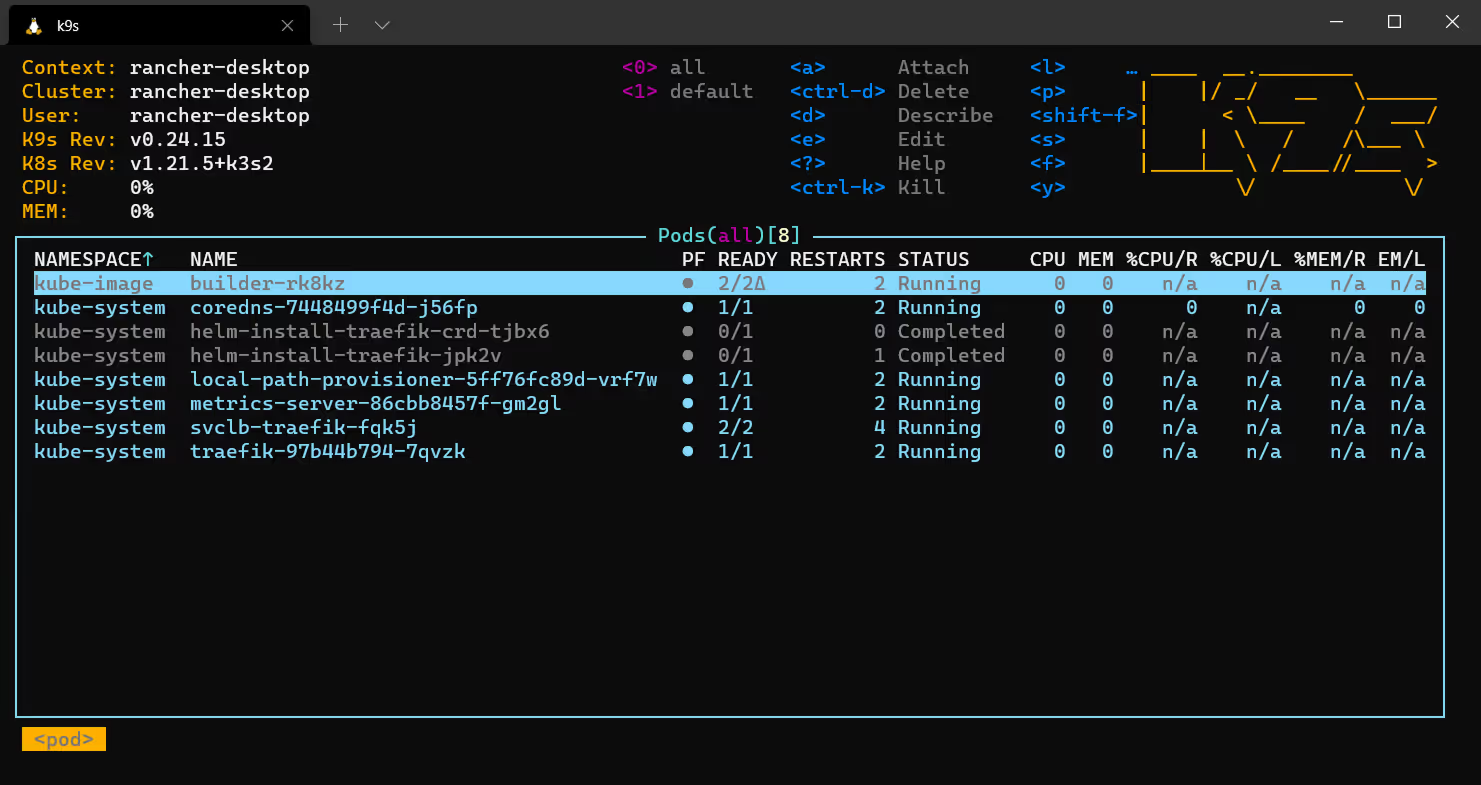
mogenius vs. Headlamp
Open-source Kubernetes web UI focused on resource visualization.
Lens is a Kubernetes IDE for the individual engineer, mogenius is a platform for the whole developer lifecycle. Both connect to clusters you already run, and they answer different questions: how one engineer works with a cluster, against how a team ships to it and who is allowed to do what. This page compares both along the criteria that actually decide the case.

VS.

mogenius is a web-based platform for the developer lifecycle on Kubernetes. It connects to existing clusters through an open-source operator and adds workspaces per team, central RBAC and SSO, GitOps pipelines, built-in monitoring, and audit trails across clusters.
Lens is a Kubernetes IDE for the desktop, developed by Mirantis. It runs locally with the credentials of the person using it, respects the RBAC those credentials carry, and includes AI assistance through Lens Prism and Lens Agents.
The dividing line is not the number of features. It is scope, who the software serves, and whether it carries governance.
The developer lifecycle on Kubernetes: deploying, operating, monitoring, and governing access across clusters and teams.
A Kubernetes IDE on the desktop: working with clusters, inspecting workloads, troubleshooting, and observing, all from one local application.
Whole teams in one shared environment, including people who should not need kubectl in order to ship.
The individual engineer at their own machine, working with the cluster access their own credentials carry.
Connects to existing clusters through an open-source operator, in the cloud, on premises, or at the edge. Users work in the browser, with nothing to install per machine.
Installed as a desktop application per machine, and updated per machine.
Several clusters side by side in one interface, with RBAC, policies, and templates that apply across all of them, in the cloud, on premises, or at the edge.
Several clusters through the kubeconfig contexts on that machine, switched one context at a time.
Access is granted centrally through workspaces and RBAC, with SSO through Okta, Entra ID, AWS IAM, or Auth0. Developers work without a cluster credential of their own, and access stays revocable and attributable per team and environment.
Runs locally with the user's own credentials and respects the RBAC those credentials carry, so scope follows the identity on each machine.
Part of the platform: GitOps pipelines with Argo CD integration, build and deploy per application, environments per team, plus templates and golden paths.
Deployments and pipelines run in the tooling around the IDE.
Included: Prometheus and OpenTelemetry integration, live pod logs, Kubernetes events, and resource topology in one view, shared by the whole team without wiring up a separate stack.
Displays workload metrics and can install a metrics stack per connected cluster. The view stays on the engineer's own machine.
Policies, roles, and audit trails across all connected clusters, plus ISO 27001 and PCI-DSS evidence generated continuously from live operational data, CB-validated by TÜV Rheinland.
What happened in a cluster is traceable through the cluster's own audit log, tied to the identity that acted.
AI Agents you define yourself: prompt, model, and the tools an agent may use, scoped to a workspace and a team. Five ship preconfigured, from Security Auditor to Workload Doctor, and they run on a schedule or when a resource changes. Actions wait for approval before they run, and every one is attributed to an identity in the audit log. Any hosted or self-hosted model connects, as do MCP servers.
Lens Prism and Lens Agents are built into the IDE, scoped to the user's active context and the permissions of their credentials, and extensible through MCP integrations.
API, CLI, and SDKs for custom workflows, with the open-source operator connecting any conformant Kubernetes distribution.
Extensible through the Lens Extension API.
Vendor support with onboarding, plus professional services for architecture, migration, and managed operations. Support comes directly from the team that builds the platform, and mogenius is ISO 27001 certified as a company.
Vendor support from Mirantis, alongside documentation and an established user community.
A shared, governed environment in which a whole team ships, and in which access and actions stay accountable.
Fast, deep local work on a single cluster for an experienced engineer who wants an IDE on their own machine.
*This comparison does not cover every feature. It is based on publicly available vendor documentation as of July 2026. Both products develop continuously, so check each vendor's current documentation for anything that matters to your decision. For mogenius, that is the mogenius documentation.
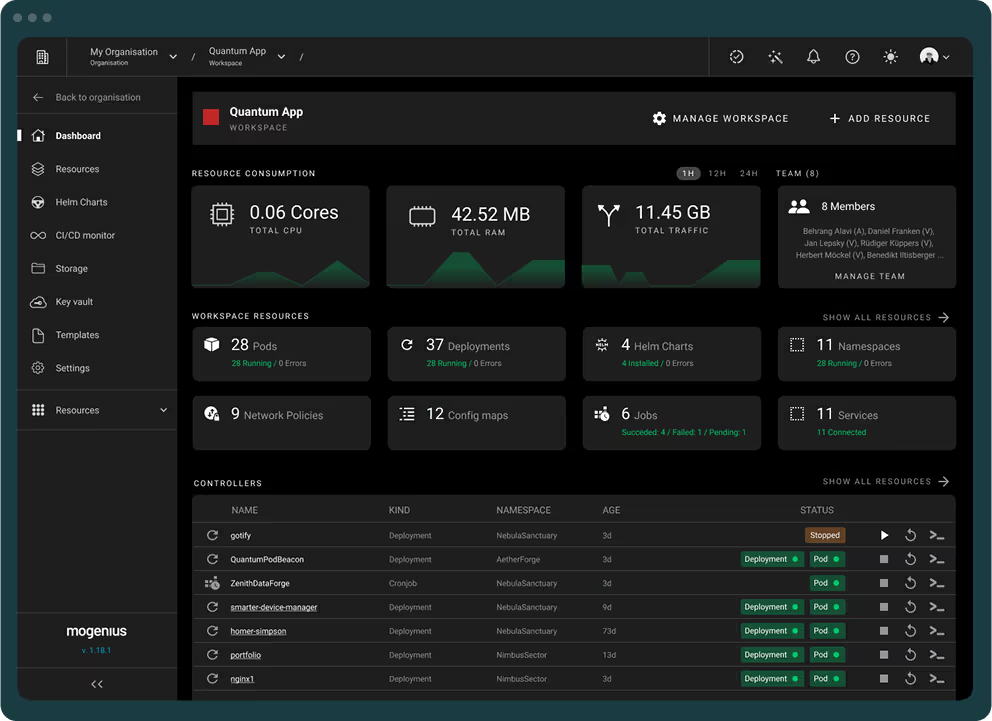
An IDE makes one engineer faster on a cluster, and Lens does that well. mogenius continues where a per-machine tool ends: workspaces per team and environment, central RBAC and SSO instead of credentials on every machine, GitOps pipelines from commit to environment, built-in monitoring, and audit trails plus compliance evidence across clusters. Both can run side by side, and many teams do exactly that: Lens stays the local tool for engineers who want it, while mogenius is the shared layer the team ships from.
Get started effortlessly with an optimized setup process that reduces time to productivity
Organize your resources efficiently and monitor performance across different environments.
Enhances security by defining roles and permissions, ensuring that users have access to only what they need.
Integrate effortlessly with your CI/CD pipelines for streamlined deployments.
Adaptable platform that grows with your needs, providing customizable solutions.
Quickly identify and resolve issues with real-time logging, alerts, and resource topology views that surface problems before they impact operations.
Built-in AI Agents and AI Chat let teams interact with their clusters safely, governed by the same RBAC and workspace structure that controls all other access.
Native GitOps workflows and Single Sign-On integrate directly into your existing engineering processes, so access management and delivery stay in one place.








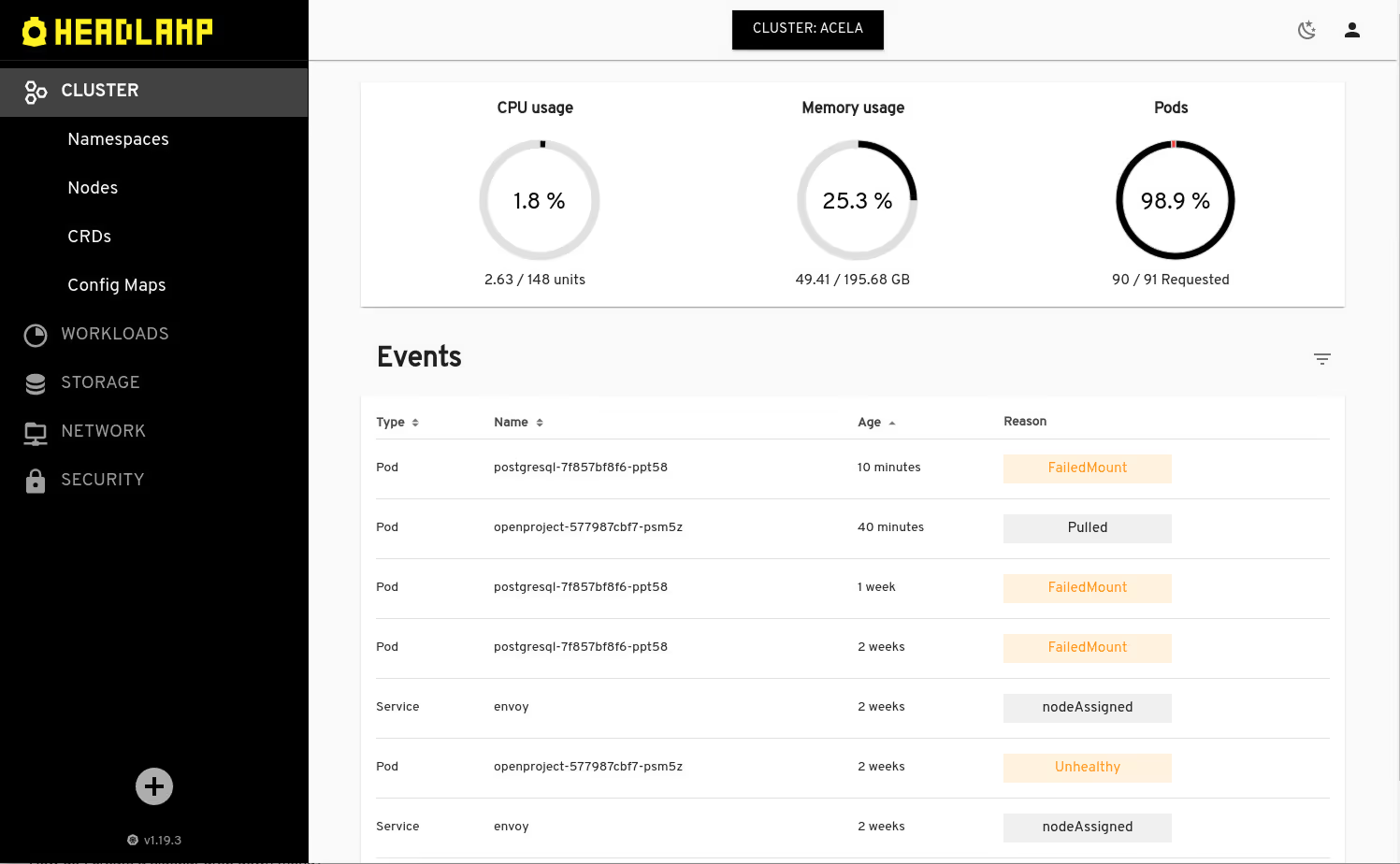
Lens is a Kubernetes IDE installed per user, aimed at working with individual clusters from that machine. mogenius is a web-based platform for teams, with shared workspaces, central RBAC and SSO, GitOps pipelines, monitoring, and developer self-service. The dividing line is scope: a tool for one engineer against a platform for the whole developer lifecycle.
Lens is a good fit for experienced Kubernetes engineers who want fast local access to a cluster. mogenius fits teams that need developer self-service, central RBAC, and a shared environment several people work in. Many organisations use both, at different points in their workflow.
Yes. mogenius manages multiple clusters from one web interface, with RBAC that applies across all of them. Clusters connect through an open-source operator and can run in the cloud, on premises, or at the edge.
With Lens, access is based on the local kubeconfig each user holds. mogenius manages access centrally through its operator and workspace structure: developers get exactly the scope they need, without a cluster credential on their own machine, and every action is attributable in the audit log.
Yes. Both can run in parallel. Lens stays useful as a local debugging tool, while mogenius provides the shared platform layer with workspaces, governance, and self-service for the team.
Yes. mogenius includes AI Agents and AI Chat as part of the AI Suite. Teams define agents with their own prompt, model, and tools, scoped to a workspace and a team. Five agents ship preconfigured: Security Auditor, Cluster Cleaner, Resource Optimizer, Workload Doctor, and Best Practice Advisor. Actions wait for approval before they run, and every action is attributed to an identity and recorded in the audit log.
Plans differ in included users, connected clusters, and add-ons such as the AI Suite. Because that changes over time, this comparison names no figures. The current plans are listed on the mogenius pricing page.
For teams that need more than viewing a cluster, yes. mogenius covers cluster visibility and adds developer self-service, team workspaces, GitOps pipelines, and central RBAC. For a single engineer who only wants a local view of one cluster, Lens remains the lighter choice.
Book a walkthrough of mogenius on your own clusters, or explore what the platform covers first.
Certifications & Memberships




mogenius is a CNCF Silver Member, a NeoNephos Foundation member, a Certified Kubernetes product, and ISO 27001 certified via TÜV Saarland.